

Undermount and top-mount sinks can use similar bowls, materials, and finishes, but they create different requirements for countertops, installation, packaging, and after-sales support. For distributors and project buyers, the mounting method affects more than appearance. It influences the cutout, hardware, installer skill, sealing process, replacement conditions, and risk of site errors.
The better choice depends on the target market and project conditions. Buyers should compare the complete installation system rather than selecting a sink from product photographs alone.
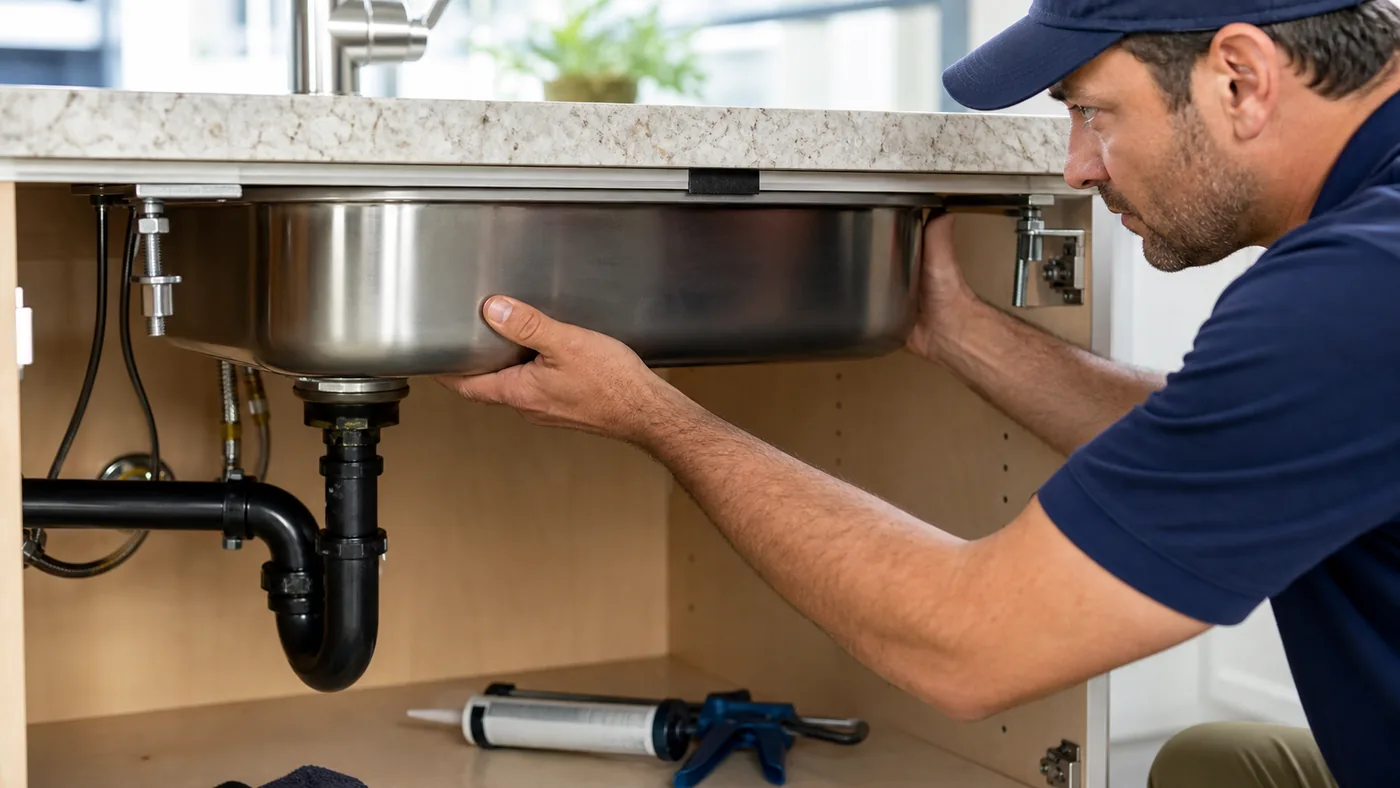
How an undermount sink is installed
An undermount sink is fixed below the countertop so the counter edge remains visible around the bowl opening. The clean transition is popular in modern kitchens and allows crumbs or water to be wiped directly into the sink. The installation commonly uses adhesive or sealant together with clips, rails, brackets, or another support method appropriate to the sink and countertop.
The countertop cutout and edge finishing are visually important. Stone, solid-surface, and suitable engineered materials are commonly used, while the project designer and installer must confirm compatibility. The sink rim, cutout reveal, faucet position, cabinet clearance, and support method should be coordinated before fabrication.
How a top-mount sink is installed
A top-mount, drop-in, or inset sink is lowered into the countertop opening from above. Its rim rests on the countertop and helps cover the cut edge. Clips and sealant are typically used to secure and seal the sink according to the installation design.
Top-mount installation is often more tolerant of countertop materials and replacement conditions. It can be practical for renovation, rental housing, promotional programs, modular cabinetry, and markets where installer capability varies. The visible rim becomes part of the design and must have consistent flatness and finish.
Comparison for B2B buyers
Appearance and positioning
Undermount sinks are associated with a seamless, premium countertop appearance. Top-mount sinks offer a familiar visible rim and can serve a wide range of price points. Both can be positioned successfully when the dimensions, finish, accessories, and photography match the intended channel.
Countertop and installation control
Undermount projects require more coordination of cutout geometry, edge treatment, support, sealant, and cabinet access. Top-mount models can simplify the visible cutout edge, but the rim must sit evenly and the clip system must suit the countertop. In either case, provide a cutout template and installation instructions that match the exact model revision.
Cleaning and maintenance
An undermount installation removes the raised rim from the countertop surface, but the joint below the counter still needs correct sealing and maintenance. A top-mount rim is visible and may collect residue if the seal or cleaning is poor, but it is also accessible for inspection. Maintenance outcomes depend heavily on installation quality and care.
Packaging and logistics
Protect the entire rim and corners for both mounting types. Undermount rims and mounting hardware must arrive without deformation because fit and reveal are sensitive. Top-mount rims are exposed after installation, so scratches, dents, or unevenness are immediately visible. Pack templates, clips, drains, overflow parts, and instructions so that installers can identify the correct set.
Questions to settle before ordering
- Which countertop and cabinet sizes are used in the target market?
- Who produces the cutout and who is responsible for the template?
- What reveal or rim appearance is expected?
- Which mounting hardware, sealant guidance, drain, and accessories are included?
- Will the product be sold for new construction, renovation, or both?
- What installer instructions and languages are required?
Choose the mounting method that fits the complete project. Undermount sinks support a clean premium look when countertop fabrication and installation are well controlled. Top-mount sinks offer broad compatibility and straightforward replacement for many markets. Some distributors carry both to serve different channels.
Explore our kitchen sink range or send the countertop, cabinet, dimensions, quantity, and target market for a model recommendation.
Plan the assortment and after-sales support
Distributors do not always need to choose only one mounting type. A focused assortment may use undermount models for premium stone-countertop projects and top-mount models for renovation, rental, and value-oriented channels. Shared bowl dimensions, drains, accessories, finishes, or carton formats can simplify purchasing and spare-part management. Compare expected sales volume and installer capability before expanding the number of sizes and variants.
After-sales planning should cover missing clips, damaged drains, templates, seals, and installation questions. Keep model-specific drawings and instructions accessible after the original shipment. If a sink must be replaced, confirm whether the cutout, reveal, hardware, and finish remain compatible with the current production revision. Collect feedback from installers during the pilot stage; unclear templates or difficult clips are easier to correct before a national rollout. A mounting system that is easy to explain and support can be more valuable than a small difference in initial unit price.
Include installation files with every order
`nProvide the approved cutout drawing, mounting sequence, hardware list, sealant guidance, countertop limitations, and support contact in a format installers can access on site. Consistent documentation reduces incorrect cutouts, missing parts, and avoidable warranty claims across different distributors and project locations.
`n